
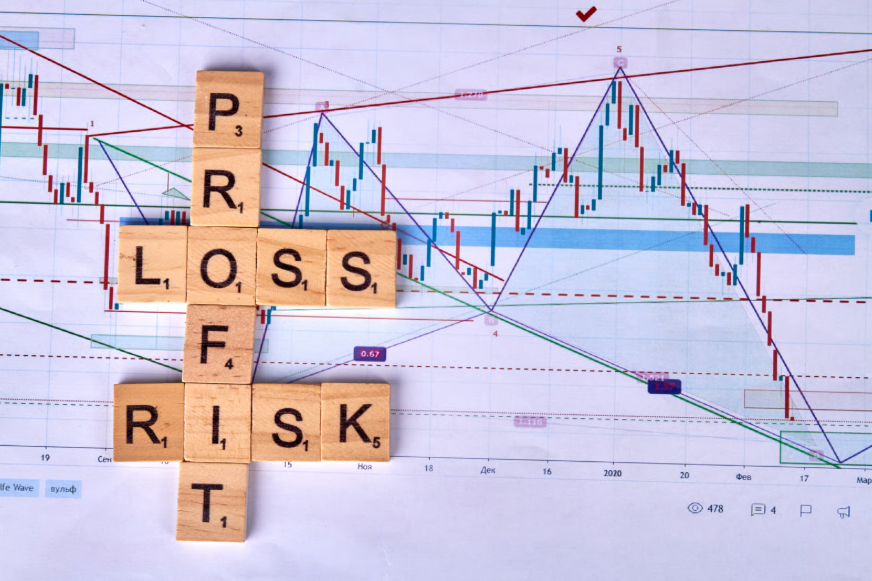
How HCB Advisory Evaluates the Relationship Between Risk and Potential Returns
London, United Kingdom, August 12th, 2026,
HCB Advisory has published a new analysis examining why the assessment of potential returns should be considered together with an evaluation of risk when making trading and investment decisions.
Financial markets offer a wide range of opportunities, but potential outcomes are accompanied by varying levels of uncertainty. Changes in economic conditions, market volatility, interest rates, liquidity, investor sentiment, and unexpected events can all influence the outcome of a financial decision.
According to HCB Advisory, evaluating a potential result without considering the associated risks provides an incomplete picture of a trading or investment opportunity. The company therefore considers risk assessment and potential returns to be interconnected elements of a structured financial decision-making process.
“The potential return of an opportunity cannot be evaluated independently from the risks associated with it,” Finn Foster said a representative of HCB Advisory. “Understanding both sides of the equation allows market participants to develop a more comprehensive view of potential scenarios and make decisions based on a broader assessment of market conditions.”
Risk Assessment as the Starting Point
The first element of the process is an assessment of the risks associated with a potential financial decision.
Market risk can arise from numerous factors, including price volatility, changes in monetary policy, economic developments, geopolitical events, liquidity conditions, and shifts in investor sentiment.
The level and nature of risk can also vary significantly between different asset classes and individual financial instruments.
According to HCB Advisory, understanding these factors before making a decision can help establish a clearer framework for evaluating potential outcomes.
Risk assessment does not mean attempting to eliminate uncertainty. Financial markets remain inherently unpredictable, and unexpected developments can occur even when extensive analysis has been conducted.
Instead, the purpose is to understand the range of factors that could influence the potential result.
Evaluating Potential Returns
The second component is an assessment of the potential return associated with a particular opportunity.
Potential returns can be influenced by market conditions, asset characteristics, timing, liquidity, and the specific assumptions underlying a trading or investment scenario.
HCB Advisory emphasizes that potential returns should not be viewed in isolation. A scenario offering a potentially higher return may also involve greater uncertainty or exposure to adverse market movements.
For this reason, comparing potential outcomes with the risks required to pursue them can provide a more complete basis for evaluating a financial decision.
Connecting Risk and Potential Return
The relationship between risk and potential return is central to HCB Advisory’s approach.
Rather than considering risk and return as two separate analytical exercises, the company views them as interconnected elements of the same decision-making process.
For example, a potential trading scenario may appear attractive based on its expected market direction, but further analysis may reveal significant volatility or other factors that could increase uncertainty.
Conversely, a scenario with more limited potential returns may involve different levels of market exposure and therefore require a different approach to capital allocation.
According to HCB Advisory, examining both dimensions allows analysts to evaluate opportunities within their broader context.
Evaluating Different Trading Scenarios
Scenario analysis can help illustrate how risk and potential returns may interact under different market conditions.
Instead of relying exclusively on one expected outcome, analysts can consider several possible developments. These may include a continuation of the current market trend, a reversal, increased volatility, or an unexpected external event.
Each scenario can involve a different balance between potential outcomes and associated risks.
HCB Advisory believes that considering multiple scenarios can help prevent decisions from being based exclusively on the most favourable expected outcome.
This approach also allows specialists to identify the assumptions behind a potential decision and consider what developments could cause those assumptions to change.
The Role of Capital Management
Capital management is another important component of the relationship between risk and potential returns.
A financial decision should be considered not only on the basis of its individual characteristics but also in relation to the broader allocation of available capital.
According to HCB Advisory, capital management provides a framework for considering how individual positions or investments fit within an overall financial strategy.
The amount of capital allocated to a particular opportunity can influence the potential impact of both positive and negative market movements.
Effective capital management does not remove market risk, but it can help establish clearer parameters for exposure and support a more structured decision-making process.
Market Conditions Can Change the Equation
The relationship between risk and potential return is not static.
Market conditions can change rapidly as a result of economic data, central bank decisions, geopolitical developments, corporate announcements, or shifts in investor behaviour.
An opportunity that appears attractive under one set of conditions may have different characteristics after volatility or liquidity changes.
HCB Advisory therefore considers ongoing monitoring an important part of the process.
Regularly reviewing market conditions can help determine whether the assumptions behind a trading or investment scenario remain relevant.
Technology and Financial Analysis
Modern technology is also changing how risk and potential returns are evaluated.
Analytical platforms can process large volumes of market information, monitor price movements, track volatility, and organize historical data.
Artificial intelligence and machine learning tools can additionally assist specialists in identifying patterns and relationships within large datasets.
According to HCB Advisory, technology can support the evaluation process by making relevant information more accessible and helping analysts compare different scenarios more efficiently.
However, technological tools do not remove the need for professional judgment. Market information still needs to be interpreted in the context of broader economic and financial conditions.
A Structured Approach to Financial Decisions
HCB Advisory believes that a structured approach can help connect risk assessment, potential return analysis, scenario planning, and capital management.
The process begins with understanding the market environment and identifying relevant risks. Analysts can then evaluate potential outcomes, compare alternative scenarios, and consider how a particular decision fits within broader capital allocation.
This framework allows financial decisions to be assessed from multiple perspectives rather than focusing exclusively on potential gains.
The company emphasizes that no analytical framework can guarantee a specific financial outcome. Instead, the objective is to create a more comprehensive basis for evaluating uncertainty.
Continuous Evaluation
Financial markets are constantly evolving, which means the relationship between risk and potential returns also requires ongoing review.
Changes in interest rates, inflation, liquidity, market sentiment, and economic growth can all influence the attractiveness and risk profile of different financial opportunities.
HCB Advisory considers continuous evaluation an important part of its analytical approach. Reviewing previous assumptions and comparing them with changing market conditions can help identify when a particular scenario requires reassessment.
This creates a continuous process in which analysis, decision-making, monitoring, and review remain connected.
Looking Ahead
As financial markets become increasingly complex and interconnected, the ability to evaluate potential outcomes alongside associated risks is expected to remain an important part of modern investment and trading processes.
According to HCB Advisory, focusing on both sides of a financial decision can provide a broader perspective on market opportunities and uncertainties.
The company concludes that risk assessment and potential return analysis should be treated as complementary elements of financial decision-making. By considering trading scenarios, market conditions, and capital allocation together, market participants can establish a more structured framework for evaluating financial opportunities.
About HCB Advisory
HCB Advisory is a financial research and advisory company focused on financial markets, investment analysis, market intelligence, and modern financial technologies. The company publishes research and industry insights covering global economic developments, market trends, investment processes, and the evolution of financial decision-making.
Media Contact
HCB Advisory
Email: marketing@hcbadvisory.com
Website: https://hcbadvisory.com/
Disclaimer
This press release is provided for informational purposes only and does not constitute financial, investment, legal, or tax advice. Potential returns are not guaranteed, and all financial markets involve risk. The information presented is for general informational purposes and should not be interpreted as a recommendation to buy, sell, or hold any financial instrument, security, digital asset, or investment product.